
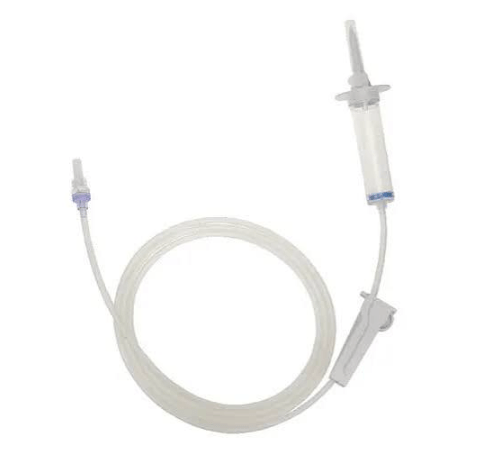
Not every infusion calls for the same drop size, and that’s exactly why the micro drip set exists. Built for situations demanding tight fluid control, this smaller-drop design plays a specific and important role in modern IV therapy.
What Makes a Drip ‘Micro’
A micro drip set delivers smaller drops, typically calibrated so that 60 drops equal one milliliter, compared to the larger drops used in standard sets. This finer calibration allows much more precise control at slow infusion rates.
Ideal Use Cases
Pediatric patients, elderly patients with fragile fluid balance, and any situation requiring very slow, carefully controlled infusion rates benefit from the finer granularity a micro drip set provides.
See also: The Do’s and Don’ts of Interactive Screens in Healthcare Facilities
How It Differs From Pump-Controlled Infusion
While electronic pumps offer even greater precision, micro drip sets remain valuable in settings without pumps on every bed, or as a reliable backup during equipment shortages.
Calculating Flow Rate
Because the drop factor is fixed at 60 drops per mL, calculating a rate in drops per minute becomes a straightforward conversion from the ordered mL-per-hour rate.
Additional Resource
For a deeper technical comparison against larger-drop options, a full guide covering m icro drip set lays out the differences side by side.
Frequently Asked Questions
Who typically needs a micro drip set?
Pediatric patients, neonatal units, and adults requiring very slow or precisely controlled fluid administration are the most common users.
Why is the drop factor fixed at 60 per mL?
This standardized ratio simplifies rate calculations and is widely recognized across clinical training, reducing the chance of math errors at the bedside.
Can a micro drip set replace an infusion pump entirely?
It can serve as a manual alternative, but pumps generally offer more consistent long-term accuracy for complex regimens.
Conclusion
A micro drip set fills a very specific niche: situations where slow, careful, and precisely measured fluid delivery matters more than speed. Recognizing when to reach for this option rather than a standard set is a small but meaningful clinical judgment call.